
Six Events, Six Months: What Building The Sandbox Has Taught Me
From an evening with ten attendees to a 70-person gathering backed by Emergent: lessons in consistency, visibility, and building a tech community in Saigon.
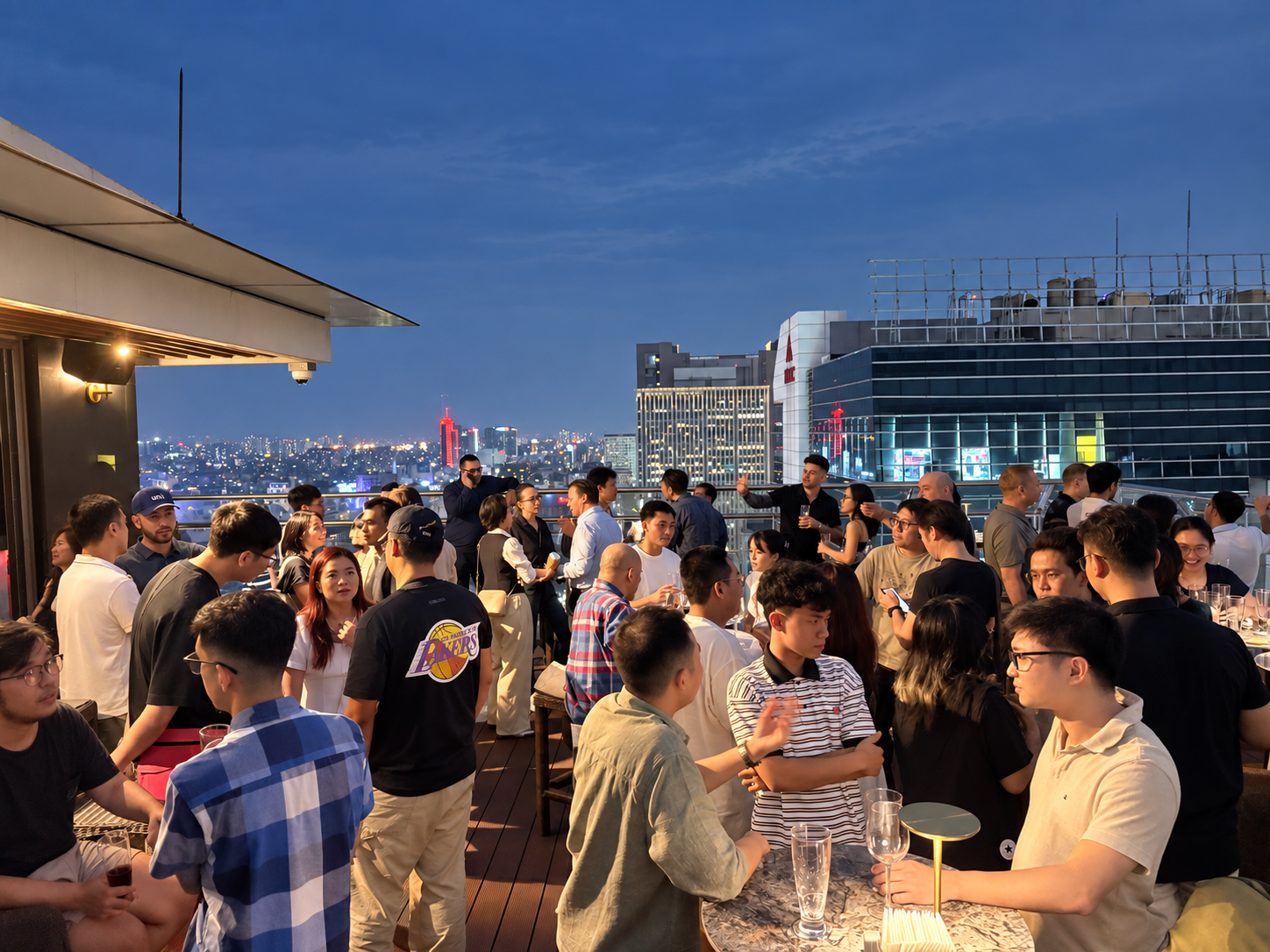
Six months ago, I started The Sandbox because I wanted more of a particular kind of evening in Ho Chi Minh City: tech people, builders, and curious minds meeting over a beer or a drink, in a nice setting, with space to talk.
After six events, there are now more than 400 contacts in our Luma audience who have registered for our gatherings. Our sixth event brought 70 people together, with sponsorship from Emergent, a leading solution to build your application, websites or tools with AI.
Those numbers sit alongside another one: at an earlier event, more than 40 people registered, but only seven showed up.
Both evenings belong to the same story. Between them were venue searches, requests for deposits, questions about charging attendees, difficult reactions to promotion, and experiments with how to bring people together.
This is what the first six months have taught me.
Start with an evening you want to attend
When I first wrote about why I started The Sandbox, the motivation was to create more space for useful conversations between people in technology.
For me, the starting point was simple. I wanted an evening where someone building a product could meet someone experimenting with a new tool, or someone simply curious enough to join the conversation. A good venue and a drink could make that first exchange feel easier.
That intention gave me something to return to while figuring out the practical details. The format could change. The reason for bringing people together could stay steady.
A community needs a way to pay for the next event
Finding a suitable venue quickly raises questions beyond whether the place looks good.
Some spaces ask for a deposit. That means making a commitment before you know how many people will attend. At the same time, you have to think about asking attendees for money: what should they pay for, what will they receive, and how do you explain it?
Those questions became part of organizing The Sandbox. Wanting to gather people was the starting point; working out a model that could support another gathering was part of making it last.
For anyone starting something similar, I would bring that question into the planning early: what would make this possible to organize again?
A big thanks to MixTap and Kin Hotel for they early support of the event.
Fifty registrations can still mean ten people in the room
At one event, more than 50 people registered on Luma. Only ten attended.
That gap was disappointing. It also made the difference between interest and attendance very concrete. A registration tells you someone considered coming. On the evening itself, you discover how many people made it there.
I now have another distinction to keep in mind. The 400-plus contacts accumulated through our events represent a growing audience. They do not tell me how many people will attend the next gathering or how many will become regular participants.
A registration is a beginning. Showing up is another step.
Keeping those measures separate makes it easier to see where the community stands and what still needs work.
Staying visible can be uncomfortable
People need to hear about an event before they can attend it. Promoting The Sandbox in groups also brought harsh comments.
That is an uncomfortable part of starting something: you are trying to gather people while other people are publicly reacting to the attempt.
The challenge is to keep enough distance to judge the feedback. Some criticism may help improve an invitation or where it is shared. A harsh reaction alone does not tell you whether the gathering is worth organizing.
Perseverance becomes practical here. It includes continuing to make the event visible while paying attention to how you invite people.
Event four: a rooftop Builder Night
For the fourth event, I tried a different approach.
The Agentic AI building week was taking place, so I independently organized a related Builder Night during the same week. I chose a rooftop venue and gave the evening a clear identity: a place for builders to meet over a drink.
More than 35 people showed up. For me, that was a great success!
I cannot separate exactly how much the timing, theme, or venue contributed. Together, they gave me a combination worth learning from.
This is the part of consistency that interests me most: keeping the purpose steady while adjusting how you deliver it. Organizing another event gave me another opportunity to learn what people would respond to.
Visibility opened the door to Emergent
Emergent found my event on Luma. Their community builder contacted me, and the company went on to sponsor our sixth event, which brought 70 people together.
That is a concrete example of why visibility mattered. An event listing reached someone outside my existing conversations and became the starting point for a collaboration.
I cannot say that six events automatically produce a sponsor. In our case, putting the event out there made that introduction possible.
Across six months, several things had begun to accumulate: experience organizing gatherings, gathering contacts through registrations, and a visible history of events. The sponsorship became another step in that developing story.
That is how I understand the compounding effect at this stage. Each event can leave something useful for the next one, even when the immediate result is smaller than you hoped.
Help shape what comes next
Six events are a beginning. We are exploring new formats and more ways to collaborate with the community, including through a WhatsApp group.
I want the people attending The Sandbox to have a voice in what comes next. What would make these gatherings more useful? What would you like to learn, share, or help organize?
The original idea still guides us: bring tech people, builders, and curious minds together in a setting where conversation feels natural. The next step is to give those connections more ways to grow.
If that sounds like your kind of community, join The Sandbox and tell us what you would like to try next.